


-
Entertainment & Sports -
Insights
City National’s Anthony Di Santi Sees No End to Rising Sports Team Valuations

By Scott Stoddard
Sports franchise valuations are hitting record highs as team owners expand revenue growth beyond selling more tickets and hot dogs. And they’re likely to keep rising as teams’ business models evolve.
“There seems like there's no end to where the price and the bidding is going on these sports teams,” said Anthony Di Santi, who has advised team owners and investors over his 30-year career in sports banking.
The reason? Di Santi explains that sports franchises have grown into media empires with myriad revenue sources – selling broadcast rights across traditional and digital channels, licensing their brands and generating sponsorship fees.
Also, unlike TV shows, which can be watched any time, fans of the NFL and other sports tend to watch games in real time.
“You're going to watch an NFL game live – it's the only thing that could command that 18- to 49-year-old demographic,” said Di Santi, head of sports banking at City National Bank. “It's where all the advertisers and sponsors want to be.”
Like media companies, sports franchises – especially NFL teams – are now valued on a revenue multiple basis, with NFL teams currently valued at 10- to12-times revenue versus 14 to 16 times for a traditional media company.
“So, just on this basis alone, we think we’re going to see multiple expansions, which are going to drive prices higher,” Di Santi said.
Beyond revenue earned through concessions, ticket sales and media rights, sports franchises are creating an entertainment ecosystem on property surrounding game venues.
“Team owners used to say, ‘I have to put fans in the seats and sell hot dogs,’ and it would make money, but that’s not the case anymore,” said Di Santi.
When Steve Cohen bought the New York Mets in November 2020 for $2.4 billion, his vision extended beyond Citi Field. He’s developing the land around the stadium to include bike paths, a casino, hotel, restaurants and conference spaces.
“All that was created by owning the sports team, and that's also a massive driver as to why people are buying these teams right now,” Di Santi said.
In July, the Seattle Seahawks said that a group led by venture capitalist Vinod Khosla had agreed to buy the franchise for an undisclosed sum. ESPN and other outlets put the sales price at an NFL record $9.6 billion. NFL owners approved the sale on Aug. 26, just before the season kicks off on Sept. 9.
Valuations of NBA, NFL and NHL franchises have risen at least 28% annually since 2017, according to Forbes. It said in March that the average Major League Baseball (MLB) team was worth $2.9 billion, up 12% from a year earlier.
Increasingly, valuations are being driven higher by wealthy individuals, hedge funds and private equity investors who view sports franchises as a potential source of profit and safe havens during times of trouble.
The Los Angeles Lakers are in the process of being sold for a record $12.5 billion, up $2.5 billion from the team’s previous sale price of $10 billion just over a year ago.
Di Santi noted that sports franchises act as an alternative asset class – falling outside stocks, bonds and cash equivalents – and tend to hold their value even when public markets turn volatile.
“The one thing that's constant is people use sports as an outlet,” he said.
With demand growing and valuations rising, Major League Baseball (MLB) is reportedly seeking to expand to 32 teams from 30 now; the NBA is looking to put new teams in Las Vegas and Seattle as soon as 2028 and expand into Europe, while the NFL is also looking at international expansion.
Franchise values in women’s sports have also risen sharply, especially in the WNBA and soccer, as their popularity has grown, Di Santi added.
“As the smart money continues to pile in to sports, you're going to see valuations continue to rise in the short to medium term,” he said.
-
Playing It Smart: How Makai Lemon Is Building Long-Term WealthMakai Lemon, the first-round draft pick of the Philadelphia Eagles, is looking to parlay his NFL earnings into long-term financial security, something that has eluded many professional football players.
-
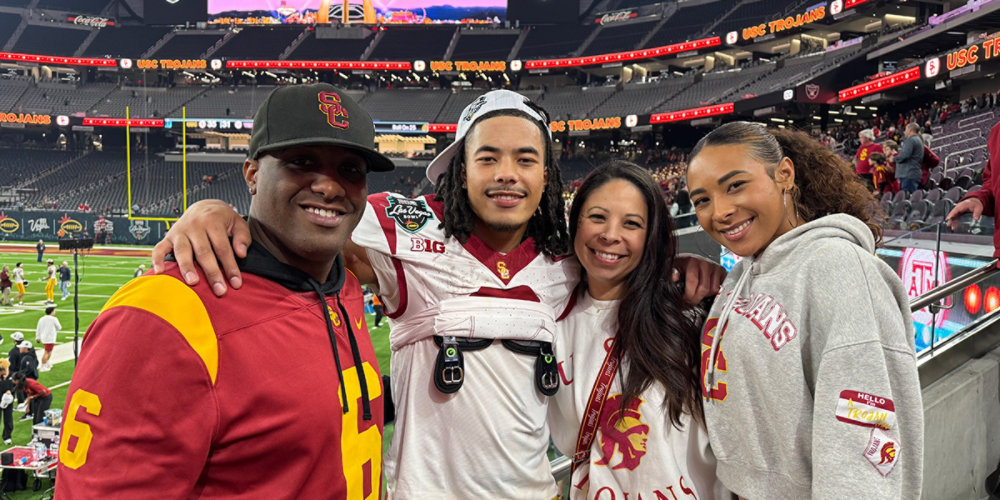
Makai Lemon’s Next Big PlayAs USC receiver Makai Lemon prepares for the NFL draft, his focus extends beyond the gridiron. Learn how the top prospect is navigating the new era of Name, Image, and Likeness (NIL) and building a strong financial foundation for the future.
This article is for general information and education only. It is provided as a courtesy to the clients and friends of City National Bank (City National). City National does not warrant that it is accurate or complete. Opinions expressed and estimates or projections given are those of the authors or persons quoted as of the date of the article with no obligation to update or notify of inaccuracy or change. This article may not be reproduced, distributed or further published by any person without the written consent of City National. Please cite source when quoting.



 Top
Top